

Hand Stitched Leather: Why It Outlasts Machine Stitching
Most people never think about the stitching on their wallet — until it starts to fail. A seam begins to separate, a thread pulls loose, and suddenly a piece of leather that should have lasted a decade looks like it belongs in the bin. Nine times out of ten, the culprit is not the leather. It is how the leather was stitched.
Hand stitched leather is the foundation of genuine leather craftsmanship. At Toprank Leather, every single product we make is hand stitched using the saddle stitch technique — not because it is easier or faster, but because nothing else comes close for long-term durability. In this guide, you will learn exactly why, and how to tell the difference when you're buying leather goods.
Table of Contents
- The Two Methods: Saddle Stitch vs. Lock Stitch
- Why Hand Stitching Is More Durable
- The Time Behind Every Stitch
- How to Identify Genuine Hand Stitching
- Repairability: The Long-Term Advantage
- How Toprank Leather Hand Stitches Every Product
- FAQ
The Two Methods: Saddle Stitch vs. Lock Stitch
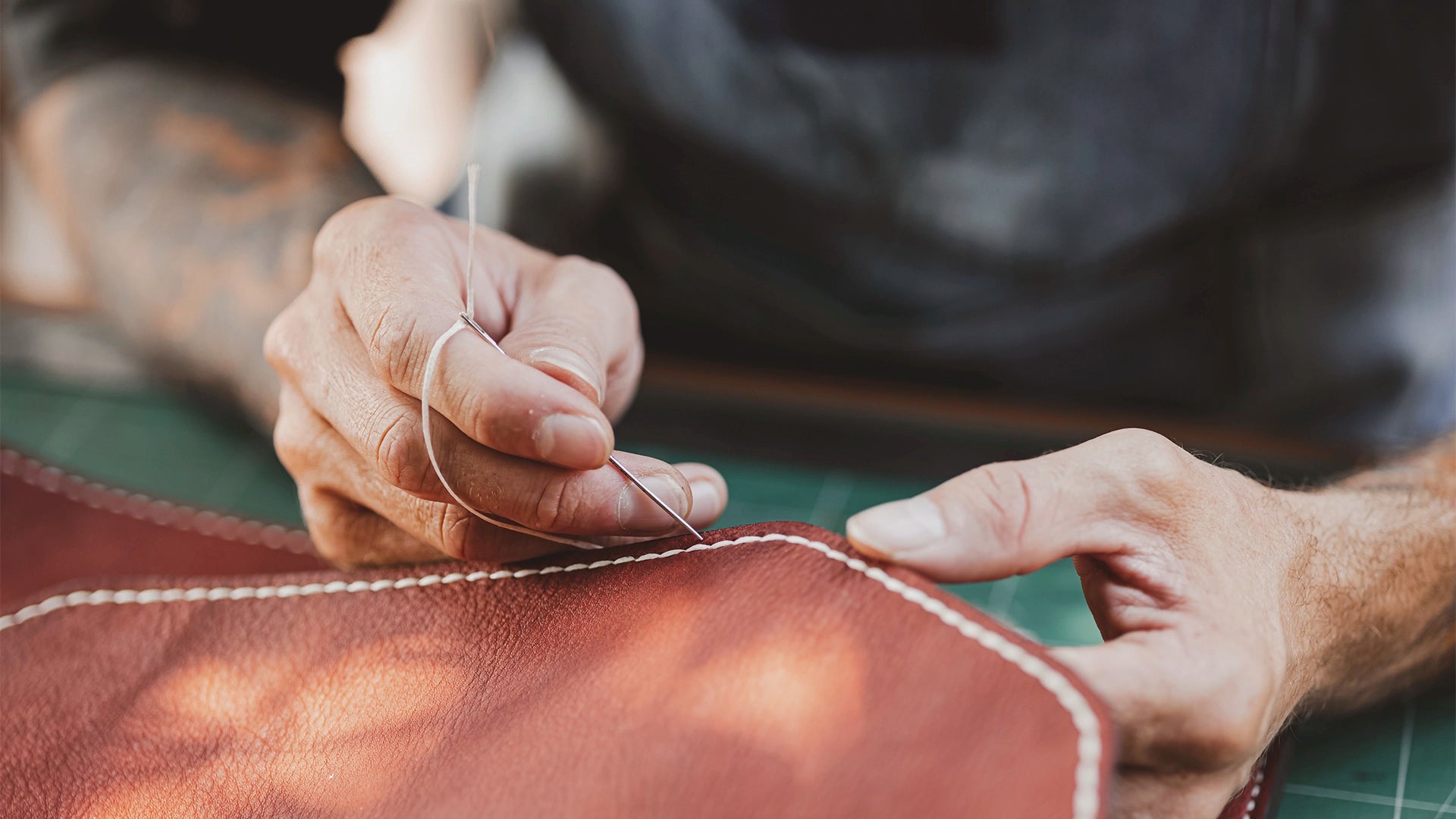
When leather goods are stitched, one of two fundamentally different techniques is used. Understanding the difference is the key to understanding why quality varies so dramatically between products.
The saddle stitch is the traditional hand-stitching method used in premium leather goods for centuries. It uses a single waxed thread and two needles — one at each end. The needles pass through each stitch hole from opposite directions, interlocking the thread so that each stitch is structurally independent of the ones around it. This is the stitch used in every Toprank Leather product.
The lock stitch is what virtually every sewing machine uses. It requires two threads: one from a spool on top, and a second from a bobbin underneath. The top thread loops around the bobbin thread to create each stitch. It is fast, consistent, and cheap — but its failure mode is catastrophic.
The difference matters far more than most people realize.
Why Hand Stitching Is More Durable
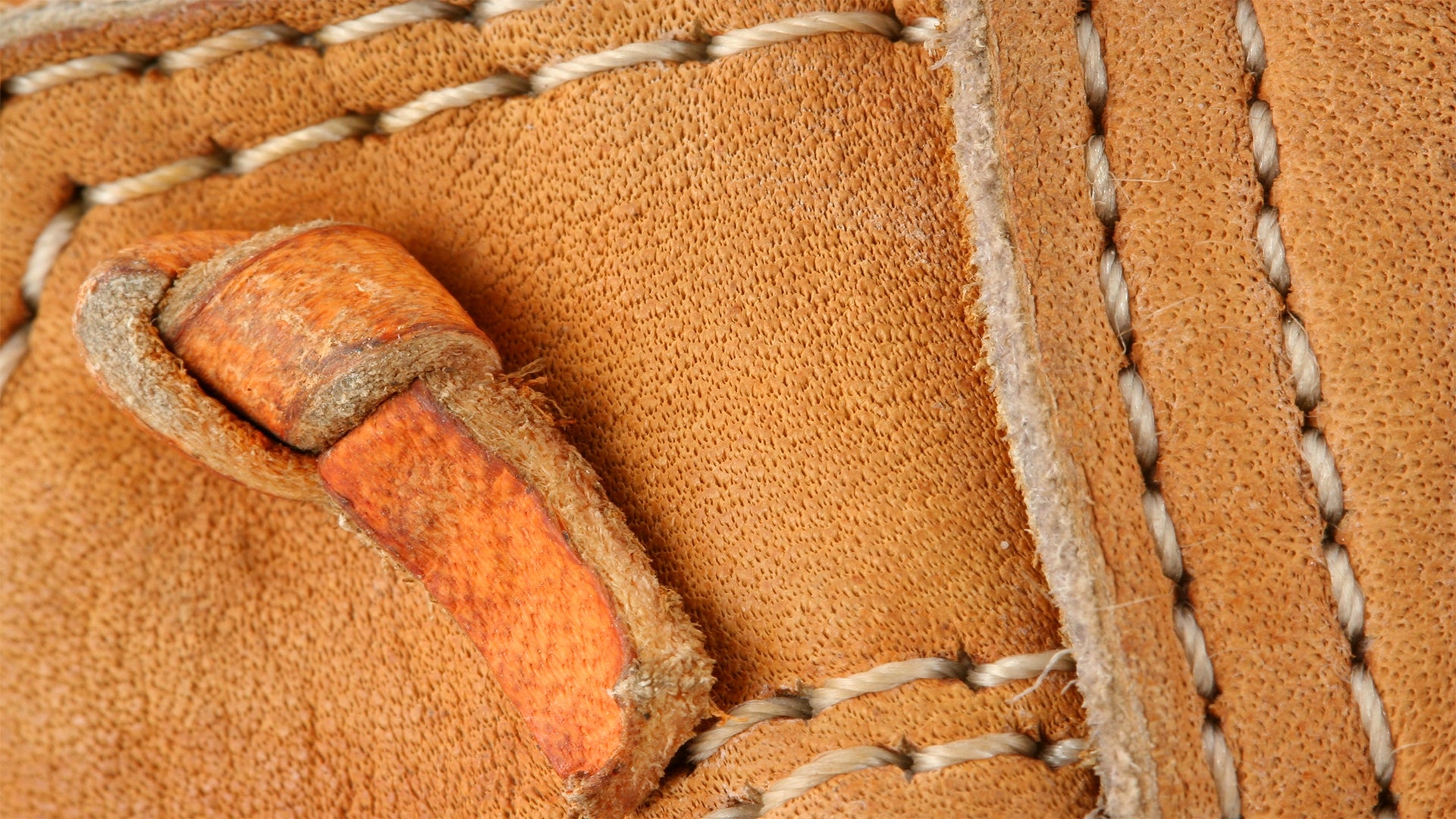
The durability advantage of hand stitched leather comes down to physics — specifically, how each type of stitch fails under stress.
In a saddle stitch, each stitch holds independently. If a single thread wears through from friction or use, only that specific point is affected. The rest of the seam remains fully intact. A leathercrafter can then re-stitch just the damaged section, and the repair will be as strong as the original.
In a lock stitch, every stitch depends on the one before it. The top and bottom threads simply loop around each other, held in place entirely by continuous tension. When daily friction wears down a single knot — and in high-wear items like wallets and belts, it will — the connection fails. Without that tension anchor, the adjacent stitches lose their hold and begin to unravel in sequence, creating a long gap in the seam very quickly.
This is not a minor difference. It determines whether your leather wallet holds together for five years or fifty.
The type of thread also matters. Hand stitched leather goods use thick, waxed linen or polyester thread that resists moisture, abrasion, and UV exposure. The wax coating protects the thread from daily wear and helps it grip the leather fiber more securely. Machine-stitched goods, by contrast, often use thinner threads chosen for speed and cost rather than longevity — and customers rarely know what thread has been used until the seam starts to fail.
The Time Behind Every Stitch
One of the most honest signals of genuine craftsmanship is how long it takes to produce something. A skilled leathercrafter takes 45 minutes to one hour to hand punch the stitch holes and saddle stitch a single wallet. A sewing machine completes the same task in under a minute.
That time difference is not wasted — it is what separates a wallet that lasts a decade from one that lasts a year. Every stitch hole is punched by hand with a pricking iron to ensure consistent spacing and clean entry points for the thread. The thread is pulled to consistent tension by feel, not by a machine. Each stitch is checked as it is placed.
This is why hand stitched leather goods cost more. You are not paying for a brand name. You are paying for time — the time of a skilled craftsperson who is responsible for every millimeter of thread in your product.
How to Identify Genuine Hand Stitching
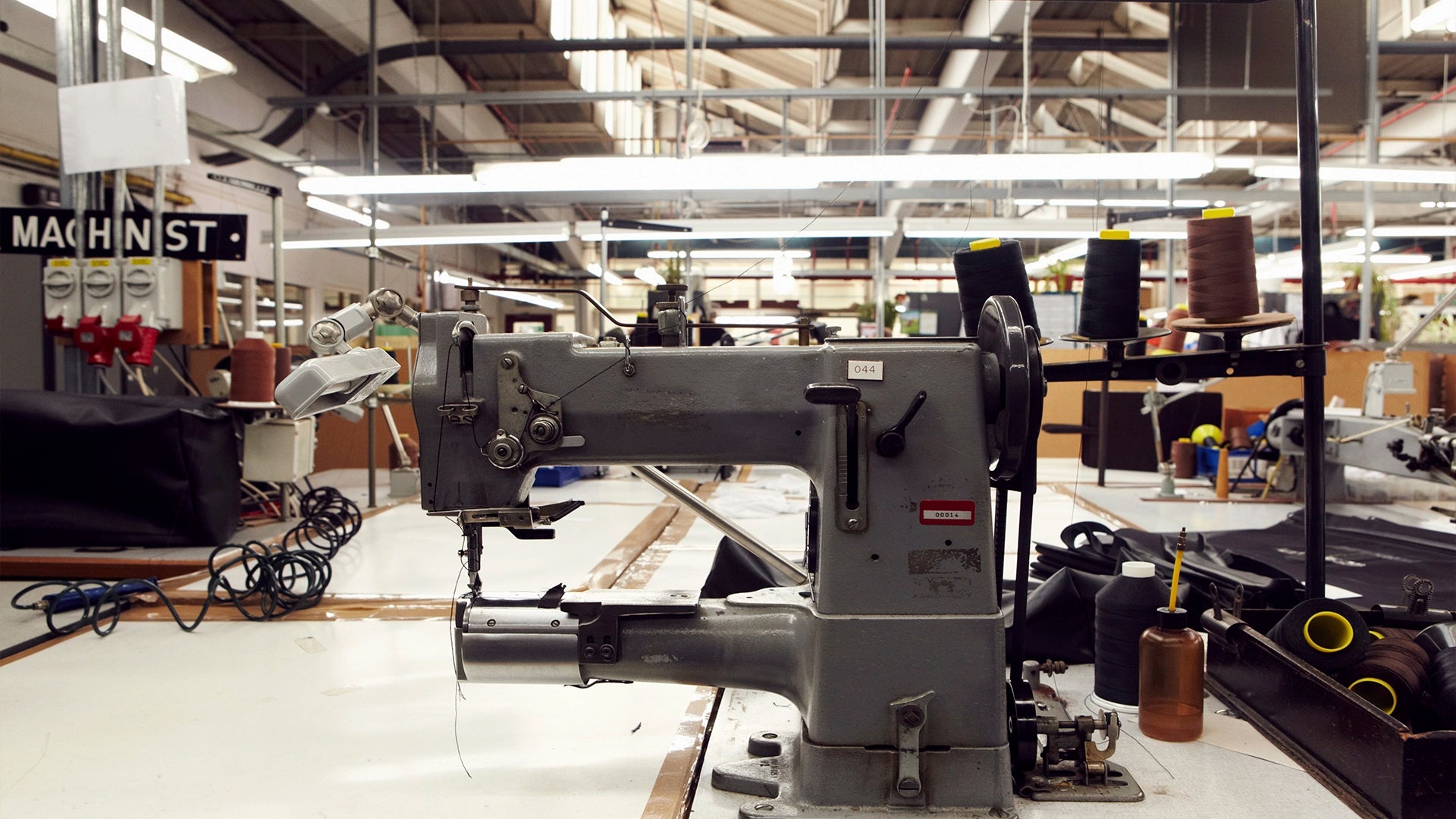
Not every brand that claims hand craftsmanship actually delivers it. Here is how to tell the difference when examining a leather good:
1. Stitch consistency. Perfectly identical stitches are almost always a machine. Genuine hand stitching has very slight variations in spacing and angle — not sloppiness, but the natural variation of human hands working with care. Look closely: each stitch should have a subtle diagonal lean, which is the hallmark of the saddle stitch.
2. Thread thickness and texture. Hand stitched leather uses thicker, waxed thread that you can feel slightly raised above the leather surface. Machine thread is thinner and sits flatter.
3. The stitch groove. Quality leathercrafters cut a shallow groove into the leather surface before stitching — called a stitch groove — so the thread sits recessed and protected from abrasion. If the thread sits proud of the leather surface with no groove, it is more vulnerable to wear.
4. Edge finishing. Hand-crafted pieces typically show burnished, sealed edges — compressed and smoothed through friction and natural wax compounds. Raw, unfinished edges are a sign of mass production shortcuts.
5. The back of the seam. Turn the item over and examine the stitching from the reverse. In saddle stitching, both sides of the seam look identical — because the same thread passes through each hole from both directions. Machine lock stitching shows a different pattern on the reverse side.
Repairability: The Long-Term Advantage
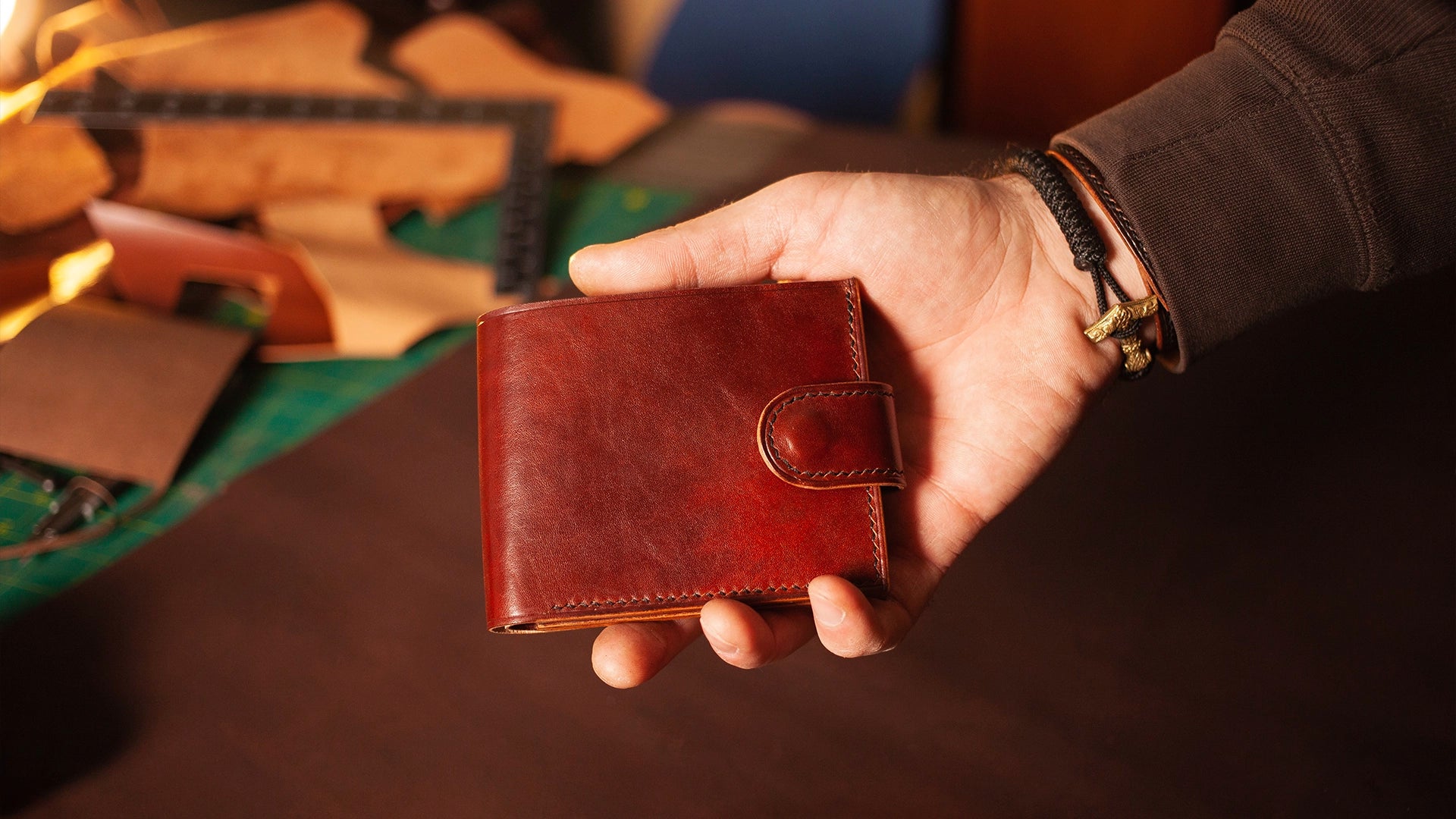
One of the most overlooked advantages of hand stitched leather is what happens years down the line when wear eventually takes its toll.
Because saddle stitching is independent stitch-by-stitch, any damaged section can be re-stitched without removing or replacing the surrounding seam. A skilled leathercrafter can open just the affected area, re-punch the holes if needed, and lay new thread with the same technique — the repair will be as strong as the original, and nearly invisible.
Machine stitching is a different story. When a lock stitch seam begins to unravel, the continuous nature of the thread means the damage spreads. Attempting to repair it often requires removing long sections of the original stitching, which can damage the leather itself. In many cases, the item cannot be properly repaired and must be replaced.
For those who invest in quality leather goods with the intention of keeping them for decades, repairability is not a minor footnote — it is part of what justifies the investment.
How Toprank Leather Hand Stitches Every Product
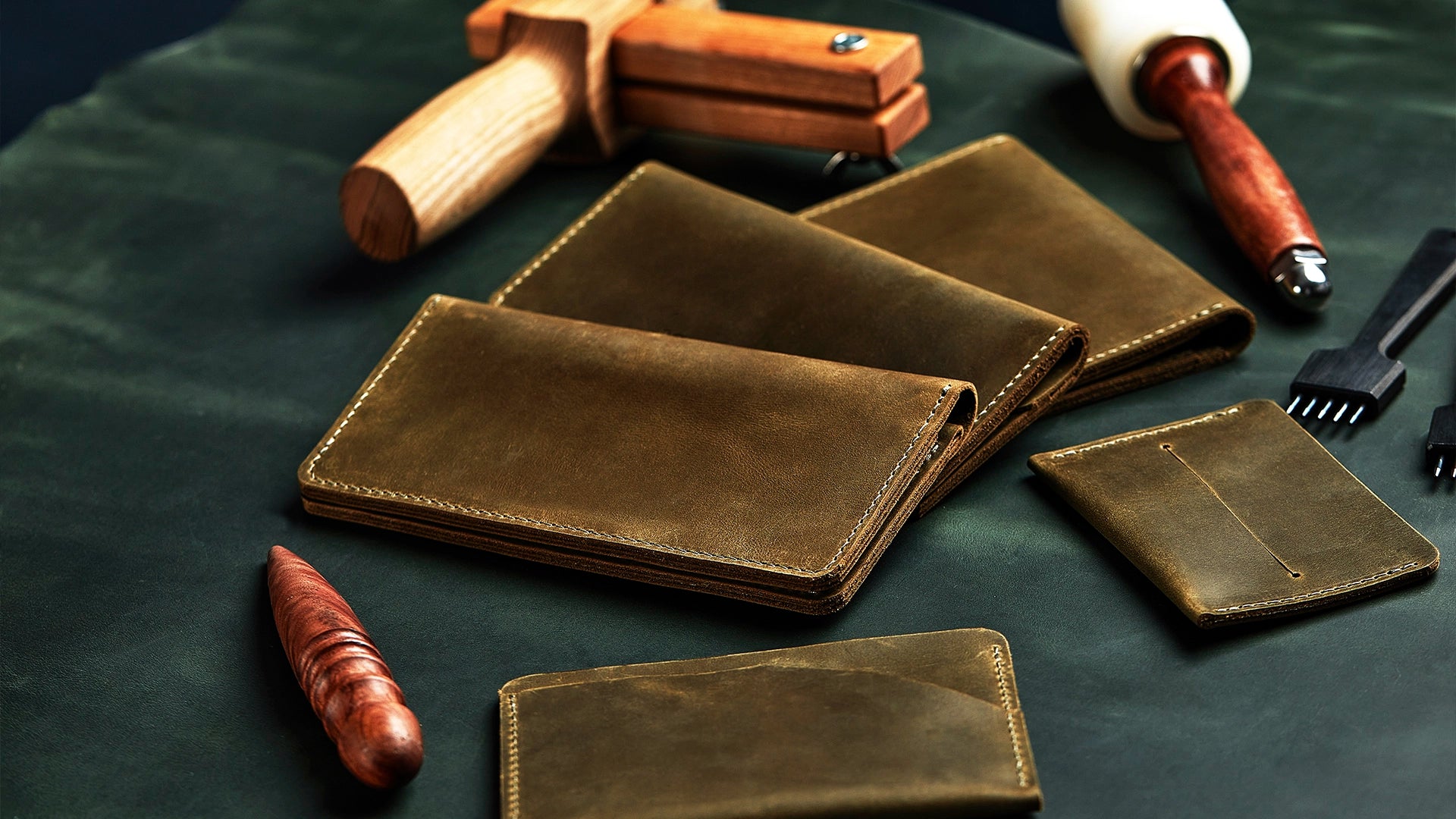
At Toprank Leather, hand stitching is not a marketing claim — it is a commitment that shapes every decision we make.
Every product in our Personalized Leather Accessories collection is hand stitched using the saddle stitch technique, on full vegetable tanned leather sourced from tanneries that meet international quality standards. We use waxed, high-tenacity thread selected for durability rather than cost.
This is why our products take 7–10 days to craft. It is not a delay — it is what craftsmanship requires.
If you want a leather wallet, card holder, or luggage tag that you will still be using in ten years, you can explore our full handcrafted collection. Every piece is made to order, stitched by hand, and built to last.
Conclusion
The difference between hand stitched leather and machine stitched leather is not aesthetic — it is structural. The saddle stitch creates seams that hold independently, fail gracefully, and can be repaired. The lock stitch creates seams that look the same on day one but fail faster and cannot be properly fixed.
Every Toprank Leather product is hand stitched because we believe quality is not something you can shortcut. The time invested in each stitch is the reason these pieces last — and the reason they become more yours with every year you carry them.
FAQ
Is hand stitched leather more durable than machine stitched?
Yes. Hand stitched leather uses the saddle stitch — two threads interlocking through each hole independently. If one thread breaks, the others hold. Machine stitching uses a single looped thread, so one break can cause the entire seam to unravel.
What is saddle stitching in leather goods?
Saddle stitching is the traditional hand-sewing technique used in premium leather goods. It uses two needles on a single waxed thread, passing through each stitch hole from opposite directions. The result is an interlocked, self-reinforcing seam that does not unravel.
How can I tell if a leather wallet is hand stitched?
Look for slight irregularities in stitch spacing — perfectly uniform stitches almost always indicate a machine. Hand stitched leather also shows thicker, waxed thread and a slight diagonal angle to each stitch, which is a hallmark of saddle stitching.
Can hand stitched leather be repaired?
Yes — this is one of its biggest advantages. Because each stitch in saddle stitching is independent, a damaged section can be re-stitched without replacing the entire seam. Machine stitching is much harder to repair because the thread is continuous.
Why does hand stitching take longer than machine stitching?
An experienced leathercrafter takes 45 minutes to an hour to hand stitch a single wallet. A machine can do the same in under a minute. The time investment accounts for hand-punching stitch holes, threading two needles, and working each stitch by hand — but the result lasts decades longer.
About the Maker
Every Toprank Leather piece is cut, stitched and finished by hand in our Istanbul workshop — 11 years of full grain, vegetable-tanned leather craft. We publish these guides to share what we learn at the bench, and everything we make is backed by a lifetime warranty.


