What Is Crazy Horse Leather? The Pull-Up Finish, Explained
In this article
Crazy Horse leather is a finish, not a grade and not a tannage. It's hide that has been saturated with waxes and oils so that bending or scratching the surface displaces the wax and leaves a lighter mark, which rubs back out with warmth and friction.
That's the whole mechanism, and it explains almost everything people find confusing about it — why it scratches so easily, why the scratches vanish, and why two products both labelled Crazy Horse can be built from very different hides.
Key Takeaways
- Crazy Horse is a trade name for a wax-and-oil pull-up finish. It describes the surface treatment, not which layer of the hide you got or how it was tanned.
- The pull-up effect is wax moving, not colour changing. Press or scratch it, the wax shifts and the tone lightens; rub it, the wax flows back.
- Pull-up is not patina. Patina is an irreversible chemical change in vegetable tanned leather. Pull-up is reversible, and most guides conflate the two.
- The name guarantees nothing about grade. Good Crazy Horse starts with full grain; cheaper versions use corrected grain under the same label.
- Care it wrong and you'll make it worse. Warmth and a cloth fix most marks. Conditioner chases them into dark blotches.
What Is Crazy Horse Leather?
Hide with a heavy wax and oil finish worked into the grain surface. The name has nothing to do with horses — it's a trade name, and the leather is almost always cowhide.
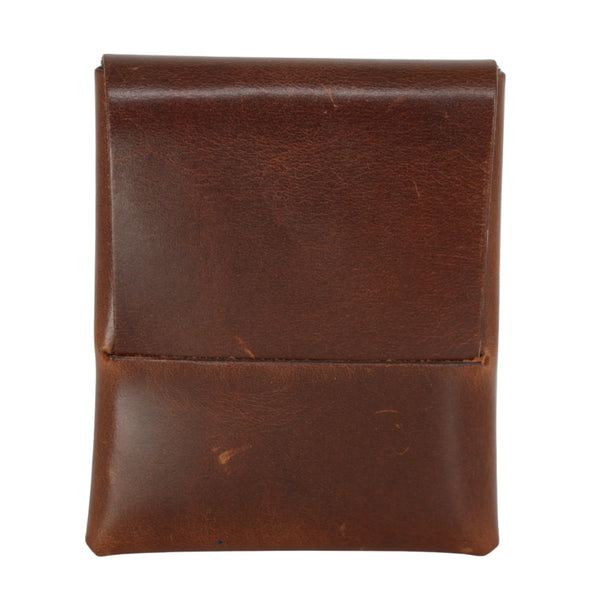
After tanning, the hide goes through a process where a blend of waxes and oils is drummed or rolled into the surface under pressure. The waxes saturate the top layer rather than sitting on it as a film. That's the difference between this and a pigmented finish: a pigment coat is a separate skin that can crack and peel, while the wax in Crazy Horse is inside the leather's own fibre structure.

That saturation is also why the surface looks uneven from day one. A Crazy Horse panel is rarely a flat single colour, and the variation isn't a defect — it's wax sitting at different densities across the hide.
Why the Pull-Up Effect Happens
Because the wax moves and the light changes.
When you fold, press or scratch the surface, the waxes and oils are physically displaced away from the point of stress. With less wax in that spot, light scatters differently off the fibres underneath and the area reads as lighter. Trade references describe the effect in exactly those terms: the oils and waxes are displaced by movement of the material, exposing the lighter tone beneath (International Leather Club, retrieved 2026-08-07).
The practical consequence: your new Crazy Horse wallet will pick up a scratch on the first day, and that scratch is not damage. Run a thumb over it. Most of the time it's gone.
Pull-Up Is Not Patina
Almost every guide to this leather calls the pull-up effect a patina. They are different processes, and confusing them will lead you to expect the wrong thing from the material.
Patina is chemistry. In vegetable tanned leather, ultraviolet light and air react with the plant tannins in the hide. Quinones form on the tannin's phenolic structure and the leather darkens permanently. You cannot rub a patina off, and you cannot rush it beyond a point — prolonged irradiation eventually degrades the collagen rather than darkening it further. We covered that research in our guide to how vegetable tanned leather develops a patina.
Pull-up is physics. Wax gets pushed out of the way and comes back. Nothing has reacted. Nothing is permanent.
Neither is better. They're different behaviours, and you should buy the one you actually want. If you want a wallet that keeps a permanent record of a decade — darkening honey to amber to something close to caramel — you want vegetable tanned full grain. If you want something that looks lived-in immediately, shrugs off scuffs, and lets you erase a mark with your thumb, Crazy Horse does that and veg tan does not.
We put that choice side by side on a single object in our comparison of how the two leathers age on a keyring, month by month over the first three years.
What the Name Doesn't Tell You
Three things, and all three matter more than the name itself.
It doesn't tell you the grade
Proper Crazy Horse starts with full grain hide — the outer layer with its surface intact. But the term is a finish description, so nothing stops a seller applying the same wax treatment to corrected grain, where the surface has been sanded and rebuilt. Multiple sellers in this category acknowledge the practice: cheaper goods use the same label over thinner hides, lower grades, or heavier coatings (Eiken, retrieved 2026-08-07).
The check is the same one that works for any leather. Look at the cut edge, look for irregular pores and the odd healed scar, and turn it over. Our guide to verifying full grain leather covers the four checks in detail.
It doesn't tell you the tannage
Crazy Horse exists over both chrome-tanned and vegetable-tanned hide; tanneries sell veg-tanned Crazy Horse sides alongside chrome-tanned ones. Since tannage is what decides whether a hide will tool, take a spirit dye, or develop a true patina, this is not a detail you can skip. Ask the seller which one it is. A maker who knows will tell you.
It isn't regulated
The FTC's leather guides at 16 CFR Part 24 govern how composition is disclosed — whether a material is leather, whether it's bonded, what percentage of leather fibre it contains. They do not define grade vocabulary, as our full grain guide sets out, and a finish trade name like Crazy Horse sits further outside that scope still. The term carries no enforcement behind it in the United States.
What It's Like to Cut and Sew
Different from veg tan in three ways that matter if you're making something rather than buying it.
It cuts clean and it cuts easy. The oils keep the fibres supple, so a sharp blade goes through 4 oz Crazy Horse with noticeably less resistance than the same weight of dry veg tan. The trade-off is that a dull blade drags and leaves a ragged edge, because there's less stiffness in the material to hold the cut line.
The edges behave differently. Vegetable tanned leather burnishes beautifully — water, friction and a slicker compress the fibres into a glassy edge. Waxed leathers don't respond the same way, because the wax is already occupying the fibre structure that burnishing needs to compress. You can get a good edge, but it comes from the wax and heat rather than from water and gum.
It doesn't take dye and it doesn't take a stamp. The colour arrives with the hide. And on chrome-tanned Crazy Horse, tooling and stamping aren't practical: an impression needs leather that cases with water, which chrome-tanned hide doesn't do. If your project is a carved pattern, this is the wrong material and no technique will fix that.

If you want to work with it yourself, we sell the same 4 oz Crazy Horse sheets we cut our own goods from, and our sheet size guide works out how much you'll need before you buy.
How to Care for It
Warmth and a cloth first. Conditioner last, and sparingly.
For an ordinary scuff, rub the mark with a fingertip or a soft cloth in small circles. The warmth softens the wax and friction redistributes it, and most marks close up within a few seconds. For a deeper scratch, warm the area gently — a hairdryer on its lowest setting, held back from the surface — then work the cloth over it.
The mistake to avoid is reaching for conditioner every time. Care guides across this category converge on the same warning: conditioner darkens Crazy Horse, and one heavy application on a small item can look blotchy rather than restored. Test any product on a hidden edge, wait, and check the colour in daylight before going near a visible panel (Thread and Maple, retrieved 2026-08-07).
Beyond that, the rules are unremarkable. Keep solvents, alcohol, bleach and household sprays off it — they strip the wax and leave a flat dead patch that shows more than the original mark ever did. Condition every three to six months if the leather starts to feel dry, and less often if it doesn't.
Should You Buy Crazy Horse?
It depends on whether you want marks to stay or go.
| If you want… | Choose | Because |
|---|---|---|
| A piece that looks broken-in immediately | Crazy Horse | The mottled surface reads lived-in from day one |
| Scratches you can rub out | Crazy Horse | Wax redistributes; most marks are reversible |
| A permanent record of years of carry | Vegetable tanned full grain | Patina is chemical and does not rub off |
| To tool, stamp or dye it yourself | Vegetable tanned | Chrome-tanned waxed hide won't case or hold an impression |
| Something forgiving in wet weather | Crazy Horse | The wax load sheds light rain better than bare veg tan |
| An even, uniform colour | Neither | Both vary; pigmented leather is what gives uniformity, at a cost |
We use both, deliberately. Our Crazy Horse AirTag keychain lives on a keyring, which is the harshest place a small leather good can live — a material that hides scuffs is the right answer there. Our wallets are vegetable tanned, because a wallet gets carried long enough for a real patina to be worth waiting for.
If you are choosing between the two on an AirTag holder specifically, the closure usually matters more than the leather does. We rank the four closure types in our guide to which AirTag holder actually keeps the tag.
Frequently Asked Questions
Is Crazy Horse leather real leather?
Yes. It's cowhide with a wax and oil finish worked into the grain. The question worth asking isn't whether it's leather but which grade of hide sits under the wax, because the name doesn't tell you.
Does Crazy Horse leather develop a patina?
Not in the strict sense. What you see day to day is the pull-up effect — wax moving under pressure, which is reversible. Over years it will darken somewhat from hand oils and dirt, but that isn't the tannin reaction that produces a vegetable tanned patina.
Why does my Crazy Horse wallet scratch so easily?
Because the finish is designed to. A scratch displaces wax and shows lighter, which is the intended behaviour rather than damage. Rub it with a warm thumb and it will usually disappear.
Is Crazy Horse leather waterproof?
No, and no leather is. The wax load helps it shed light rain better than bare vegetable tanned leather, but prolonged soaking will still mark it, stiffen it as it dries, and strip wax from the wet area.
Can I tool or stamp Crazy Horse leather?
Not if it's chrome-tanned, which most of it is. Tooling requires leather that can be cased with water and hold an impression, and chrome-tanned hide doesn't. Vegetable-tanned Crazy Horse exists and behaves differently — ask the seller which one they're selling.
Is Crazy Horse better than full grain leather?
The comparison doesn't hold, because they describe different things. Full grain is a grade — which layer of the hide you got. Crazy Horse is a finish applied on top of a grade. Good Crazy Horse is full grain with a wax finish; poor Crazy Horse is a lower grade with the same finish.
The Short Version
Crazy Horse tells you how the surface was finished. It doesn't tell you which layer of the hide it is, how it was tanned, or whether it will patina. Those are separate questions, and they're the ones worth asking a seller.
What it does give you is a material that arrives with character, takes a scratch without complaint, and hands you the scratch back when you rub it. For anything that lives in a pocket alongside keys, that's a better answer than a finish you have to protect.
Our Crazy Horse sheets come in eight colours and three sizes at 4 oz, and our AirTag keychain is made from the same hide. If you'd rather have the leather that keeps its marks, our patina guide covers what vegetable tanning does instead.